ServicesSalt Delivery
Automated Salt Delivery in Surprise
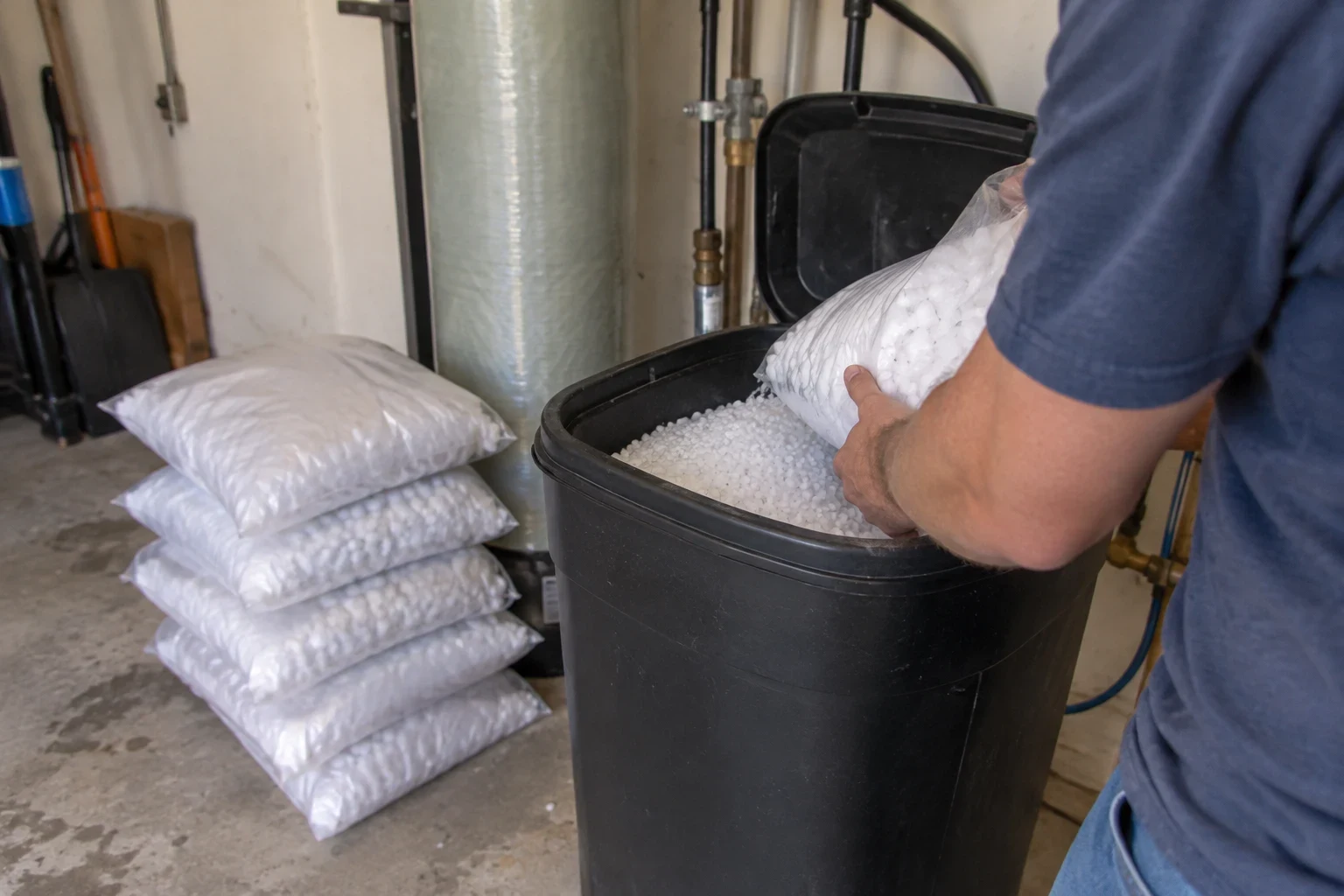
Once the brine tank goes dry, your softener lets hard water pass straight through to the faucets. We match a delivery schedule to how fast your home goes through salt, then carry the bags to the tank and load them for you. No store runs, no heavy lifting, no surprise empty tank.
Salt on a schedule, poured where it belongs
A softener pulls hardness minerals out of your water by swapping them for sodium or potassium. That swap uses up salt every time the system regenerates. When the tank runs dry, hard water goes straight through to your faucets, and most people only notice when spots show up on the dishes again.
Our automated salt delivery takes that chore off your list. We look at your softener, your household size and how fast the tank drops, then pick a delivery interval that keeps it from running low. On each visit we bring the salt, carry it to the tank and load it.
The straight answer on whether you need it: if lifting 40-pound bags is hard on you, or you keep forgetting until the water feels different, it is worth it. If you enjoy the store run and never miss a refill, you probably do not need us for this part.
What each delivery covers
- Salt brought to your door
- We bring the type of softener salt your system is set up for. You do not need to keep extra bags stacked in the garage.
- Carried in and loaded
- We carry the bags to the brine tank, whether it sits in the garage, a utility closet or along the side of the house, and pour them in.
- A look inside the tank
- Before we add salt, we check for a salt bridge, a hard crust that forms over the water and stops the softener from making brine. If we find one, we break it up so the new salt does its job.
- Level and schedule check
- We note how much salt was left since the last visit. If the tank keeps running low or barely moves, we tell you and adjust the interval.
- A heads-up on anything odd
- If something looks off with the softener itself, such as standing water high in the tank or a control that is not cycling, we point it out so you can decide what to do.
Signs salt delivery would help your home
The tank keeps running empty
You open the lid and find bare water at the bottom. Every day it sits like that, untreated hard water reaches your pipes and fixtures.
Hauling bags is getting harder
Softener salt usually comes in 40-pound bags, and a refill can take several. If that strains your back or knees, it makes sense to hand it off.
Spots and film are coming back
White spots on glasses, crusty faucet aerators or soap that will not lather well often mean the softener is out of salt, not broken.
You are away for stretches
Plenty of West Valley households travel for part of the year. A set schedule keeps the softener supplied while you are gone or busy.
You are never sure what to buy
Pellets, crystals, potassium chloride. If the store aisle leaves you guessing, we match the salt to your system so you stop second-guessing.
What sets the cost of salt delivery
Two things drive most of the price: how quickly your softener goes through salt and which salt it takes. We talk through both with you by phone before any salt shows up. That way the scope of every visit is clear from the start.
Type of salt
Solar crystals, evaporated pellets and potassium chloride are priced differently. Potassium chloride is the sodium-free option and generally costs more per bag.
How much your home uses
Household size, daily water use and the hardness setting on your softener decide how fast the salt goes down and how many bags each visit needs.
Delivery interval
Frequent small deliveries and less frequent larger ones balance out differently. We help you pick the one that suits your tank size and your routine.
Where the tank sits
A softener in an open garage is quick to reach. One tucked behind a gate or deep in a closet takes a little more time to load.
How we set it up
- 1
A quick phone call
Tell us about your softener, how many people live in your home and where the brine tank sits. We answer your questions about salt type and how often a refill usually comes up.
- 2
First visit and tank check
On the first delivery we look at the tank, check for bridging and see how much salt is left. That gives us a starting point for your interval.
- 3
We set the schedule
Based on what we see, we agree on how often to come back. Larger households and harder settings use salt faster, so the schedule fits your home rather than a generic calendar.
- 4
Regular deliveries
We arrive, carry the salt in, load the tank and close it up. If you are not home, we can work out access to the tank with you ahead of time.
- 5
Adjust as life changes
New people in the house, a long trip or a new softener can change how much salt you use. Give us a call and we shift the schedule.
Salt delivery questions
What kind of salt should my softener use?
Most residential softeners run on either sodium chloride pellets or crystals, and many can also use potassium chloride. Your system's settings and manual point to what it was set up for. We check on the first visit and bring the right type from then on.
Do I need to be home when you deliver?
No, as long as we can reach the brine tank. Many tanks sit in the garage or on the side of the house. We agree on access with you by phone before the first visit.
What is a salt bridge and why does it matter?
It is a hard shell of salt that forms above the water in the brine tank, often from humidity or overfilling. The tank looks full, but the water underneath has no salt to dissolve, so the softener stops working. We check for it each visit and break it up when we find one.
Can I change or pause my schedule?
Yes. If you travel, have guests for a month or replace your softener, just call us and we adjust the interval. The aim is a tank that never runs empty and never overflows.
What if my softener is old or not working right?
Salt cannot fix a failing control valve or a resin bed that is worn out. If we see signs of trouble, we tell you plainly. If replacement makes sense, our water softener installation page explains how that works.
Stop carrying salt bags
Call us to talk through your softener, your salt type and a schedule that fits your home. We will explain what each delivery includes before we start.