ServicesReverse Osmosis System
Reverse Osmosis System in Surprise
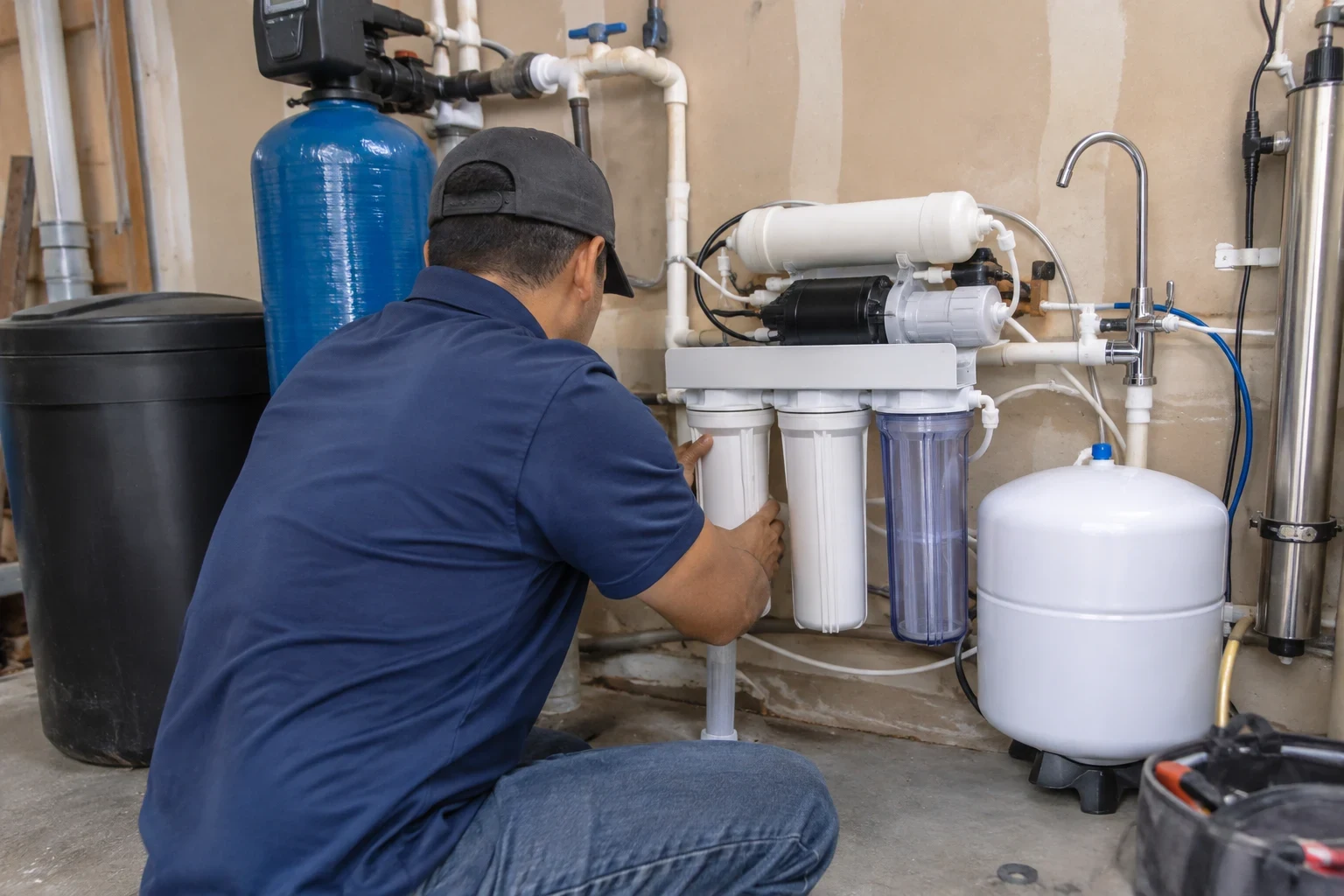
An under-sink reverse osmosis system puts a separate faucet of clean, great-tasting water at your kitchen sink for drinking and cooking. Before anything goes in, we tell you what it filters out, what it costs to maintain and whether your cabinet has room.
What a Reverse Osmosis System Does
Reverse osmosis pushes your water through a very fine membrane that holds back most dissolved minerals and salts, along with many other impurities. What comes out tastes clean and neutral, and it stops leaving white spots in your kettle and coffee maker.
It is a point-of-use system. It sits under your kitchen sink and feeds its own small faucet, so it treats the water you drink and cook with instead of the whole house. If you also want softer water for showers and appliances, water softener installation or whole-home filtration handles that side, and we can tell you plainly whether you need one, both or neither.
Our job is to give you straight answers: what RO will change, what it will not, and what upkeep looks like over the years.
What the Installation Includes
- Four-stage filter assembly
- A sediment prefilter and carbon prefilters protect the RO membrane, and a carbon polishing filter finishes the water. We mount the whole set to the cabinet wall so it stays off the floor and out of your way.
- Its own drinking-water tap
- Filtered water pours from a small faucet that sits beside your main one. When the sink deck or counter has an unused hole, we put it there. Otherwise we drill a new one, working slowly with a stone bit on granite and quartz.
- Storage tank or tankless unit
- A compact pressurized tank usually fits next to the supply lines. When the cabinet is tight, we walk you through tankless models instead.
- Supply and drain hookups
- We tap the cold line with a new shutoff valve and clamp a drain saddle onto the sink drain, placed so the garbage disposal keeps running normally.
- Optional refrigerator line
- If you would like the ice maker and door dispenser on filtered water as well, we can run a line from the system to your fridge.
- Startup, flush and walkthrough
- We flush the new filters, check every joint for drips, and show you each filter and when it is due for a change.
Signs an RO System Makes Sense for Your Home
You keep buying bottled water
If hauling cases home is a weekly chore, an RO faucet can replace most of them and clear out pantry space.
Scale in the kettle and coffee maker
That white crust is left by dissolved minerals. Hard water is common across the West Valley, and RO strips most of those minerals out of your drinking water.
Tap water tastes flat or chemical
A mineral or chlorine flavor usually goes away once the water runs through carbon and the membrane.
Cloudy ice and spotty glasses
RO water makes clearer ice and dries without chalky rings, more so when it also feeds the fridge.
Your old RO system is slow or off
Weak flow or an off taste usually points to filters past due, a worn-out membrane or a tank that needs its pressure restored. We will be honest about whether a repair makes sense or a new unit is the better buy.
What Moves the Cost
Every kitchen is set up a little differently, so we price the job once we know yours. We will tell you exactly which parts of the setup push the number up or down. These are the biggest ones.
Tank or tankless
A system with a storage tank is the lower-cost choice up front. Tankless models save cabinet space and usually pour faster, but the unit itself costs more.
Added stages
Some people like a remineralizing stage that puts a touch of calcium and magnesium back for flavor. It is optional, and it raises the price.
Faucet hole and countertop
An open hole in the sink or counter keeps things simple. Cutting through granite or quartz takes extra time and a careful hand.
Line to the fridge
Tubing to your refrigerator adds parts and labor. The farther the fridge is from the sink, the more it adds.
Filter changes over time
Expect to swap the prefilters roughly every twelve months and replace the membrane after several years. Hard water wears a membrane out sooner, which is why some homes put a softener ahead of the RO.
How the Job Goes
- 1
A phone conversation first
Tell us what you notice in your water and what your sink cabinet looks like. We lay out the options and what each one takes.
- 2
Look at the space
We check the cabinet room, the disposal, your countertop and where the cold line and drain sit. Those details settle tank or tankless and the faucet spot.
- 3
Install day
A typical under-sink install takes a few hours. We put down a mat, mount the unit, connect everything and leave the cabinet neat.
- 4
Flush and check
We start the system, let the tank fill, run off the first batch and check each fitting again before we leave.
- 5
Show you the upkeep
We walk you through which filter does what and about when each one is due, so you are never guessing.
Reverse Osmosis Questions
Does a reverse osmosis system waste water?
Yes, part of the water goes down the drain. The membrane needs that rinse flow to carry off what it catches. How much you lose comes down to the system you pick and the pressure in your lines, and current designs send far less to the drain than units from years ago. We compare the options with you before you choose.
Will RO water taste flat?
Very pure water can taste plain at first. Most people come to prefer it, especially in coffee and tea. If it still seems too bland, a remineralizing stage puts a little calcium and magnesium back for a rounder flavor.
Do I need a water softener too?
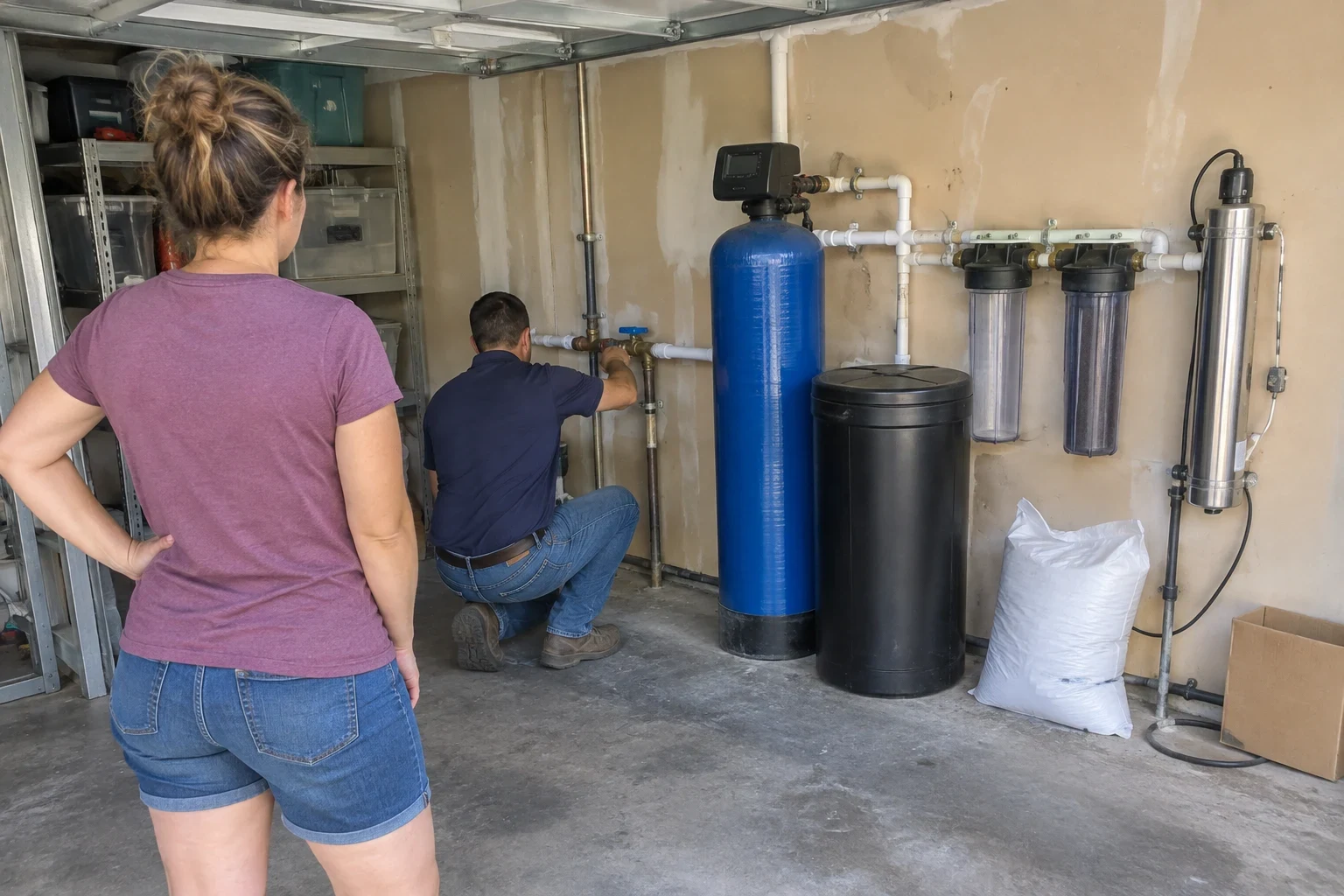
Not always. RO covers the water you drink and cook with, while a softener protects the pipes, fixtures and appliances everywhere else in your home. With hard water, a softener ahead of the RO also helps the membrane last longer. We explain both and you make the call.
Will it fit under my sink with a garbage disposal?
Usually it will. We place the filters and tank around the disposal and the plumbing you already have. If the cabinet is truly cramped, a tankless unit is often the answer.
How often do the filters need changing?
Plan on replacing the prefilters and the final polishing filter about once a year. The membrane lasts several years before it wears out. Heavy use and harder water shorten both intervals, so we show you what to watch for.
Can the system feed my refrigerator?
In most kitchens, yes. We run tubing from the RO unit to the fridge, so your ice maker and door dispenser pour the same filtered water as the sink tap.
Ready for Better Water at the Kitchen Sink
Give us a quick rundown of your sink, cabinet and what you dislike about your tap water. You will hear plainly whether RO is a good fit and what the install involves.