ServicesWhole-Home Filtration
Whole-Home Filtration in Surprise
If your tap water smells like a pool or tastes off, a whole-home filter fixes it where water enters your home. Every faucet and shower gets the same cleaner water. We explain what the system will and won't do before you decide.
Where whole-home filtration helps, and where it stops
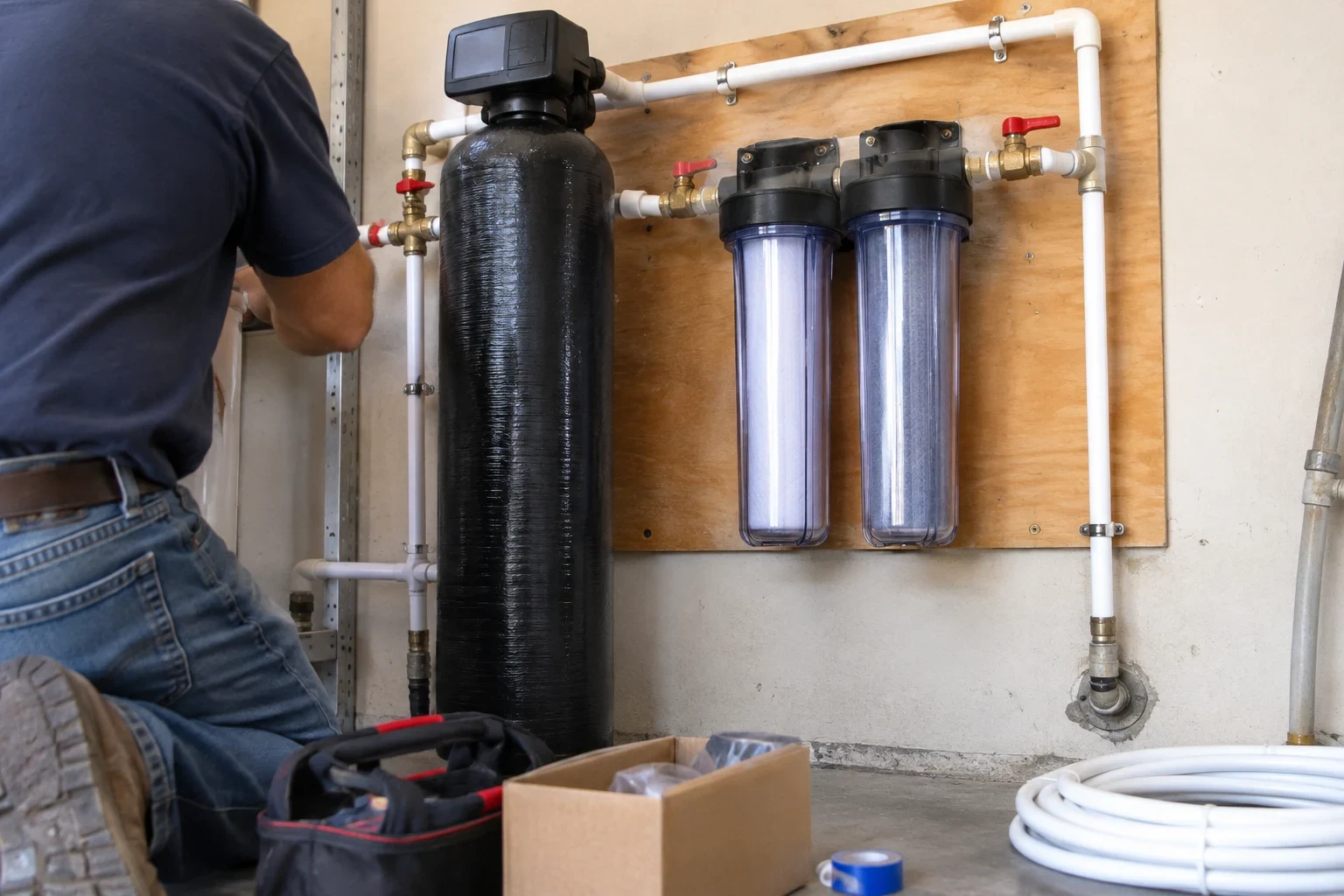
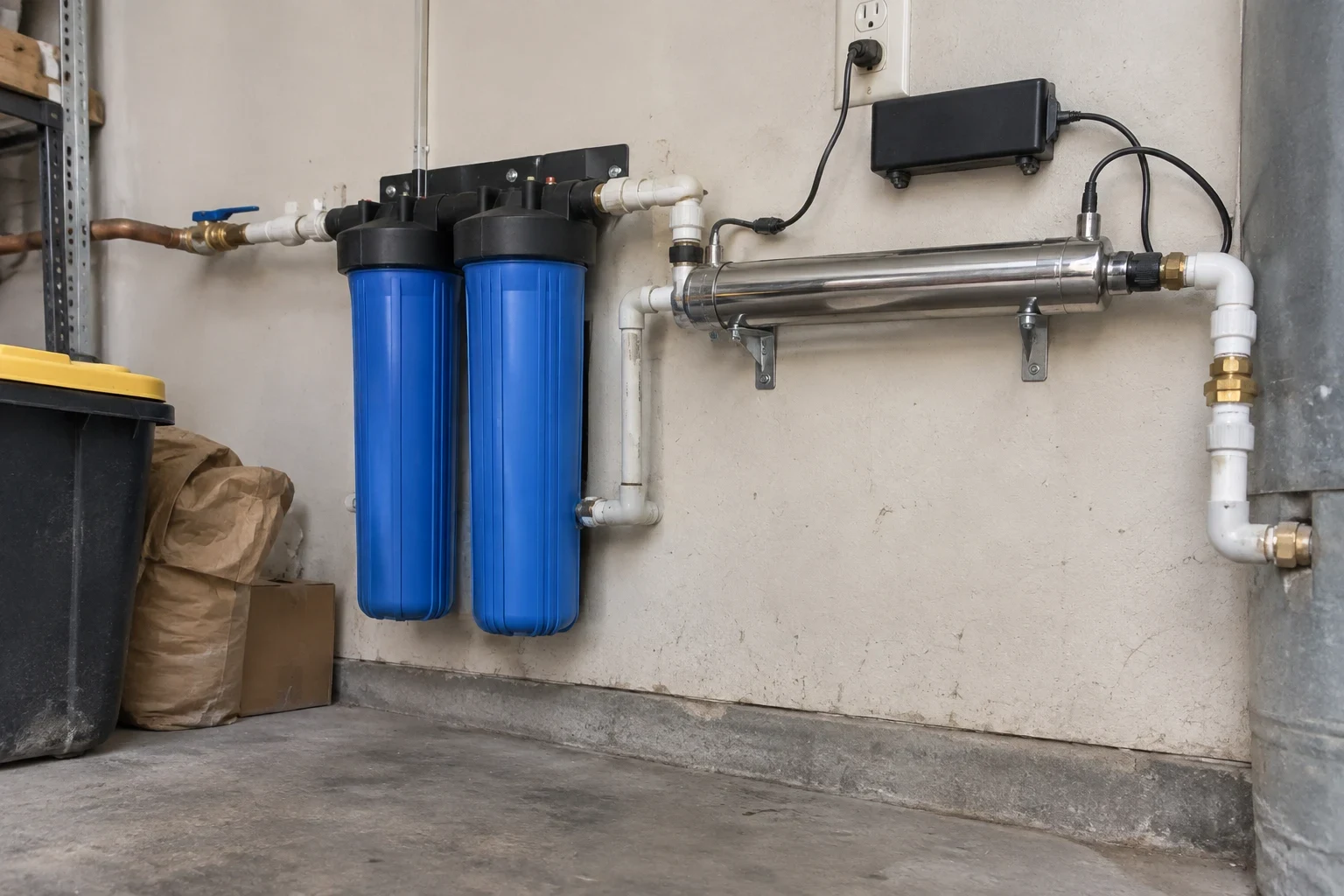
A whole-home filter is a tank or cartridge housing set on your main water line. Every gallon moves through a sediment stage, then through carbon, before it reaches a faucet or appliance. The carbon holds onto chlorine and many of the compounds that cause strange tastes and smells, so the kitchen tap, the showers and the laundry all get cleaner water.
The answer most people ask for first: a filter won't soften your water. The mineral-heavy water found across the West Valley will keep leaving spots and scale unless a softener deals with it. Lots of homes run both systems together, and our water softener installation page explains that half of the picture.
If your only concern is the water you drink, a reverse osmosis system under the sink might suit you better. Describe the problem and we'll point you to the option that actually solves it.
What comes with a whole-home filtration install
A check of your current plumbing
We look at where the main line comes in, whether you already have a softener or a loop, and how much space is available. That tells us where the filter fits and how it ties in.
Sediment prefilter
The first stage traps sand, grit and bits of pipe scale before they reach the carbon. Keeping that debris out means the carbon stays effective for its full service life.
Carbon filtration tank
The main stage holds carbon media sized to how much water your home uses. If your supply is treated with chloramine rather than chlorine, we use catalytic carbon, which is built for that job.
Bypass valve
A bypass lets water route around the filter during service or for outdoor use. Changing media won't mean shutting off water to the whole house.
Tidy connection and cleanup
We cover the floor near the work area, flush the system before leaving and take the packaging and old parts with us.
Signs your home could use whole-house filtration
A chlorine or pool smell
It's strongest in a hot shower or right when you fill a glass. Carbon filtration targets exactly this.
An odd taste in everything
Your morning coffee seems dull and the ice cubes have a chemical note. When the taste is the same at every faucet, the fix belongs at the main line rather than a single tap.
Dry skin and hair after showers
Chlorine in shower water can leave skin tight and hair rough. A whole-home filter covers the shower too, something a pitcher filter can't do.
Grit in aerators or appliance screens
Sand or sediment building up in faucet aerators and washing machine inlets is a sign you'd benefit from a sediment stage.
A steady stream of small filters
If you keep buying pitcher and fridge filters and still aren't satisfied, one system at the source is usually easier to live with.
What to expect on install day
- 1
A phone conversation first
You describe what you're noticing, whether that's a smell, a taste, grit or something else. We tell you honestly whether whole-home filtration is the right fit, and you get your quote by phone.
- 2
We settle on the location
Many homes in the area already have a softener loop in the garage, which makes the hookup easier. If yours doesn't, we plan how to tie into the main line and walk you through it before work begins.
- 3
Installation
We turn off your water, cut in the filter and bypass, and anchor the tank. Your water is only off for part of the visit, and we let you know when it shuts off and when it's back.
- 4
Flush and walk-through
We run water through the new media until any carbon fines are gone, then inspect each fitting for drips. Before we leave, we show you the bypass and explain when the media will need attention.
What moves the cost of whole-home filtration
The price depends on your home and what the filter needs to remove. We go over each factor on the phone so the quote you get makes sense before anyone shows up. No dollar figures here, because two homes rarely need the same thing.
- Size of your home and water use
- More bathrooms and people mean higher flow. The tank and media have to be sized so your water pressure stays strong.
- Type of media
- Standard carbon handles chlorine. Catalytic carbon for chloramine, or added stages for sediment, change the cost.
- Plumbing access
- An existing loop in the garage keeps labor down. Rerouting pipe or working in a tight spot takes longer.
- Pairing with a softener
- Installing filtration and a softener together can share plumbing work. If you're considering both, ask us to quote them side by side.
- Ongoing media replacement
- Carbon wears out over time. We explain how often your system will likely need new media so you know the long-term cost, not just the install.
Common questions about whole-home filtration
Something not covered here? (623) 303-9042
Will a whole-home filter fix hard water spots?
No. Carbon pulls out chlorine and the compounds behind bad taste, but it leaves calcium and magnesium alone, and those minerals cause spots and scale. A water softener is the tool for that. Plenty of homeowners put in both, so the water is soft and also tastes clean.
Will it lower my water pressure?
Not when the system fits your home. Weak pressure after an install is almost always a sizing mistake, or carbon left in service long past its useful life. We pick the tank based on your fixtures and how many people live with you, so the showers and faucets keep the flow you're used to.
Do I still need reverse osmosis for drinking water?
Often you don't. When chlorine taste is the only complaint, a whole-home filter usually takes care of it at every tap. Some people still like a second, finer stage for the water they drink and cook with, and a reverse osmosis system under the kitchen sink provides that on top of whole-home filtration.
How often does the media need to be replaced?
That depends on tank size and how much water your home goes through. A large carbon tank lasts far longer than a small cartridge. We give you a realistic timeline for your setup so the replacement doesn't come as a surprise.
Can the filter go outside?
It can, but strong sun and summer heat wear down tanks and fittings faster. If outdoors is the only spot that works, we'll talk about shading or covering the system. The garage is usually the simpler choice.
Ready for water that tastes the way it should
Tell us what's bothering you about your water and we'll tell you plainly whether a whole-home filter is the right fix. You'll know the options and what drives the price before you decide.